Get cash for unwanted CDs, DVDs and Video Games!
TRADE IN

Get cash for unwanted CDs, DVDs and Video Games!
START SELLING TODAY
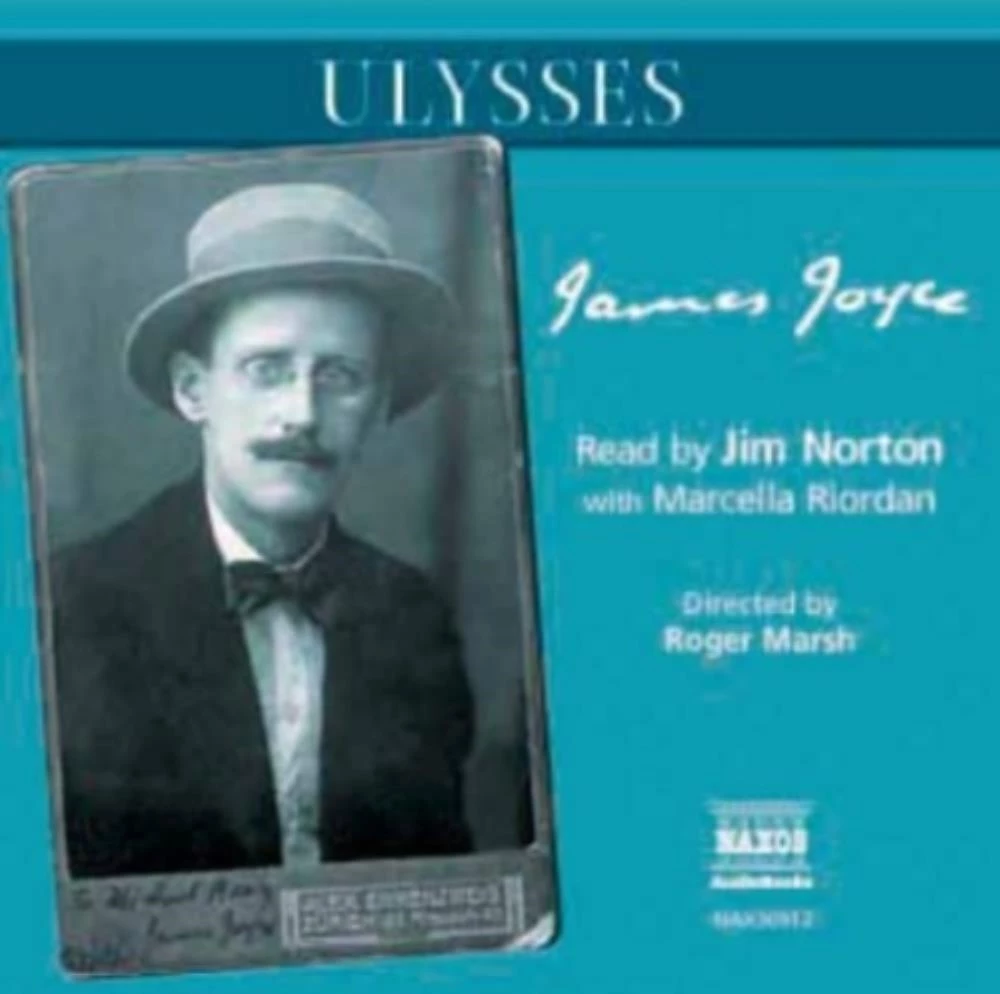
Ulysses by James Joyce The 1934 text, as corrected and reset in 1961. Ulysses is one of the most influential novels of the twentieth century. It was not easy to find a publisher in America willing to take it on, and when Jane Jeap and Margaret Anderson started printing extracts from the book their literary magazine The Little Review in 1918, they were arrested and charged with publishing obscenity. They were fined $100, and even The New York Times expressed satisfaction with their conviction. Ulysses was not published in book form until 1922, when another American woman, Sylvia Beach, published it in Paris for her Shakespeare & Company. Ulysses was not available legally in any English-speaking country until 1934, when Random House successfully defended Joyce against obscenity charges and published it in the Modern Library. This edition follows the complete and unabridged text as corrected and reset in 1961. Judge John Woolsey’s decision lifting the ban against Ulysses is reprinted, along with a letter from Joyce to Bennett Cerf, the publisher of Random House, and the original foreword to the book by Morris L. Ernst, who defended Ulysses during the trial. FORMAT Hardcover LANGUAGE English CONDITION Brand New Publisher Description Considered the greatest 20th century novel written in English, in this edition Walter Gabler uncovers previously unseen text. It is a disillusioned study of estrangement, paralysis and the disintegration of society.”From the Trade Paperback edition.” Author Biography James Joyce, the twentieth centurys most influential novelist, was born in Dublin on February 2, 1882. The oldest of ten children, he grew up in a family that went from prosperity to penury because of his fathers wastrel behavior. After receiving a rigorous Jesuit education, twenty-year-old Joyce renounced his Catholicism and left Dublin in 1902 to spend most of his life as a writer in exile in Paris, Trieste, Rome, and Zurich. On one trip back to Ireland, he fell in love with the now famous Nora Barnacle on June 16, the day he later chose as “Bloomsday” in his novel “Ulysses. “Nara was an u Review “Ulysses will immortalize its author with the same certainty that Gargantua immortalized Rabelais, and The Brothers Karamazov immortalized Dostoyevsky…. It comes nearer to being the perfect revelation of a personality than any book in existence.”-The New York Times “To my mind one of the most significant and beautiful books of our time.”-Gilbert Seldes, in The Nation “Talk about understanding “feminine psychology”– I have never read anything to surpass it, and I doubt if I have ever read anything to equal it.”-Arnold Bennett “In the last pages of the book, Joyce soars to such rhapsodies of beauty as have probably never been equaled in English prose fiction.”-Edmund Wilson, in The New Republic Kirkus US Review In 1984 was published the news-capturing scholarly work, the “Critical and Synoptic Edition” of James Joyces Ulysses, which, as The New York Times said, corrected “almost 5,000 omissions, transpositions and other errors included in previous editions of the seminal 20th-century novel.” That remarkable work of scholarship, labor, and love, however, ran to three volumes in heft and rang up at $200 in price. Here, then, comes the single-volume trade-book edition of the same edited and restored text, placing the great novel, in as close to its originally-intended form as can be achieved, within reach of the common reader. Missing only is the vast scholarly apparatus of the longer version, though this one comes with a pleasantly helpful preface by Joyce biographer Richard Ellmann and a methodologically explanatory afterward by Hans Walter Gabler. A welcome event. Publication date, readers will note, is Bloomsday. (Kirkus Reviews) Prizes Runner-up for The BBC Big Read Top 100 2003 Short-listed for BBC Big Read Top 100 2003 Review Quote “Ulysses will immortalize its author with the same certainty that Gargantua immortalized Rabelais, and The Brothers Karamazov immortalized Dostoyevsky…. It comes nearer to being the perfect revelation of a personality than any book in existence.” -The New York Times “To my mind one of the most significant and beautiful books of our time.” -Gilbert Seldes, in The Nation “Talk about understanding “feminine psychology”– I have never read anything to surpass it, and I doubt if I have ever read anything to equal it.” -Arnold Bennett “In the last pages of the book, Joyce soars to such rhapsodies of beauty as have probably never been equaled in English prose fiction.” -Edmund Wilson, in The New Republic From the Hardcover edition. Excerpt from Book STATELY, PLUMP Buck Mulligan came from the stairhead, bearing a bowl of lather on which a mirror and a razor lay crossed. A yellow dressinggown, ungirdled, was sustained gently behind him by the mild morning air. He held the bowl aloft and intoned: –Introibo ad altare Dei. Halted, he peered down the dark winding stairs and called up coarsely: –Come up, Kinch. Come up, you fearful jesuit. Solemnly he came forward and mounted the round gunrest. He faced about and blessed gravely thrice the tower, the surrounding country and the awaking mountains. Then, catching sight of Stephen Dedalus, he bent towards him and made rapid crosses in the air, gurgling in his throat and shaking his head. Stephen Dedalus, displeased and sleepy, leaned his arms on the top of the staircase and looked coldly at the shaking gurgling face that blessed him, equine in its length, and at the light untonsured hair, grained and hued like pale oak. Buck Mulligan peeped an instant under the mirror and then covered the bowl smartly. –Back to barracks, he said sternly. He added in a preachers tone: –For this, O dearly beloved, is the genuine Christine: body and soul and blood and ouns. Slow music, please. Shut your eyes, gents. One moment. A little trouble about those white corpuscles. Silence, all. He peered sideways up and gave a long low whistle of call, then paused awhile in rapt attention, his even white teeth glistening here and there with gold points. Chrysostomos. Two strong shrill whistles answered through the calm. –Thanks, old chap, he cried briskly. That will do nicely. Switch off the current, will you? He skipped off the gunrest and looked gravely at his watcher, gathering about his legs the loose folds of his gown. The plump shadowed face and sullen oval jowl recalled a prelate, patron of arts in the middle ages. A pleasant smile broke quietly over his lips. –The mockery of it, he said gaily. Your absurd name, an ancient Greek. He pointed his finger in friendly jest and went over to the parapet, laughing to himself. Stephen Dedalus stepped up, followed him wearily halfway and sat down on the edge of the gunrest, watching him still as he propped his mirror on the parapet, dipped the brush in the bowl and lathered cheeks and neck. Buck Mulligans gay voice went on. –My name is absurd too: Malachi Mulligan, two dactyls. But it has a Hellenic ring, hasnt it? Tripping and sunny like the buck himself. We must go to Athens. Will you come if I can get the aunt to fork out twenty quid? He laid the brush aside and, laughing with delight, cried: –Will he come? The jejune jesuit. Ceasing, he began to shave with care. –Tell me, Mulligan, Stephen said quietly. –Yes, my love? –How long is Haines going to stay in this tower? Buck Mulligan showed a shaven cheek over his right shoulder. –God, isnt he dreadful? he said frankly. A ponderous Saxon. He thinks youre not a gentleman. God, these bloody English. Bursting with money and indigestion. Because he comes from Oxford. You know, Dedalus you have the real Oxford manner. He cant make you out. O, my name for you is the best: Kinch, the knife-blade. He shaved warily over his chin. –He was raving all night about a black panther, Stephen said. Where is his guncase? –A woful lunatic, Mulligan said. Were you in a funk? –I was, Stephen said with energy and growing fear. Out here in the dark with a man I dont know raving and moaning to himself about shooting a black panther. You saved men from drowning. Im not a hero, however. If he stays on here I am off. Buck Mulligan frowned at the lather on his razorblade. He hopped down from his perch and began to search his trouser pockets hastily. –Scutter, he cried thickly. He came over to the gunrest and, thrusting a hand into Stephens upper pocket, said: –Lend us a loan of your noserag to wipe my razor. Stephen suffered him to pull out and hold up on show by its corner a dirty crumpled handkerchief. Buck Mulligan wiped the razorblade neatly. Then, gazing over the handkerchief, he said: –The bards noserag. A new art colour for our Irish poets: snotgreen. You can almost taste it, cant you? He mounted to the parapet again and gazed out over Dublin bay, his fair oakpale hair stirring slightly.– —- –God, he said quietly. Isnt the sea what Algy calls it: a grey sweet mother? The snotgreen sea. The scrotumtightening sea. Epi oinopa ponton. Ah, Dedalus, the Greeks. I must teach you. You must read them in the original. Thalatta! Thalatta! She is our great sweet mother. Come and look. Stephen stood up and went over to the parapet. Leaning on it he looked down on the water and on the mailboat clearing the harbour mouth of Kingstown. –Our mighty mother, Buck Mulligan said. He turned abruptly his great searching eyes from the sea to Stephens face. –The aunt thinks you killed your mother, he said. Thats why she wont let me have anything to do with you. –Someone killed her, Stephen said gloomily. –You could have knelt down, damn it, Kinch, when your dying mother asked you, Buck Mulligan said. Im hyperborean as much as you. But to think of your mother begging you with her last breath to kneel down and pray for her. And you refused. There is something sinister in you . . . He broke off and lathered again lightly his farther cheek. A tolerant smile curled his lips. –But a lovely mummer, he murmured to himself. Kinch, the loveliest mummer of them all. He shaved evenly and with care, in silence, seriously. Stephen, an elbow rested on the jagged granite, leaned his palm against his brow and gazed at the fraying edge of his shiny black coat-sleeve. Pain, that was not yet the pain of love, fretted his heart. Silently, in a dream she had come to him after her death, her wasted body within its loose brown grave-clothes giving off an odour of wax and rosewood, her breath, that had bent upon him, mute, reproachful, a faint odour of wetted ashes. Across the threadbare cuffedge he saw the sea hailed as a great sweet mother by the wellfed voice beside him. The ring of bay and skyline held a dull green mass of liquid. A bowl of white china had stood beside her deathbed holding the green sluggish bile which she had torn up from her rotting liver by fits of loud groaning vomiting.
£94.88 inc. VAT
Only 1 left in stock
Ulysses by James Joyce The 1934 text, as corrected and reset in 1961. Ulysses is one of the most influential novels of the twentieth century. It was not easy to find a publisher in America willing to take it on, and when Jane Jeap and Margaret Anderson started printing extracts from the book their literary magazine The Little Review in 1918, they were arrested and charged with publishing obscenity. They were fined $100, and even The New York Times expressed satisfaction with their conviction. Ulysses was not published in book form until 1922, when another American woman, Sylvia Beach, published it in Paris for her Shakespeare & Company. Ulysses was not available legally in any English-speaking country until 1934, when Random House successfully defended Joyce against obscenity charges and published it in the Modern Library. This edition follows the complete and unabridged text as corrected and reset in 1961. Judge John Woolsey’s decision lifting the ban against Ulysses is reprinted, along with a letter from Joyce to Bennett Cerf, the publisher of Random House, and the original foreword to the book by Morris L. Ernst, who defended Ulysses during the trial. FORMAT Hardcover LANGUAGE English CONDITION Brand New Publisher Description Considered the greatest 20th century novel written in English, in this edition Walter Gabler uncovers previously unseen text. It is a disillusioned study of estrangement, paralysis and the disintegration of society.”From the Trade Paperback edition.” Author Biography James Joyce, the twentieth centurys most influential novelist, was born in Dublin on February 2, 1882. The oldest of ten children, he grew up in a family that went from prosperity to penury because of his fathers wastrel behavior. After receiving a rigorous Jesuit education, twenty-year-old Joyce renounced his Catholicism and left Dublin in 1902 to spend most of his life as a writer in exile in Paris, Trieste, Rome, and Zurich. On one trip back to Ireland, he fell in love with the now famous Nora Barnacle on June 16, the day he later chose as “Bloomsday” in his novel “Ulysses. “Nara was an u Review “Ulysses will immortalize its author with the same certainty that Gargantua immortalized Rabelais, and The Brothers Karamazov immortalized Dostoyevsky…. It comes nearer to being the perfect revelation of a personality than any book in existence.”-The New York Times “To my mind one of the most significant and beautiful books of our time.”-Gilbert Seldes, in The Nation “Talk about understanding “feminine psychology”– I have never read anything to surpass it, and I doubt if I have ever read anything to equal it.”-Arnold Bennett “In the last pages of the book, Joyce soars to such rhapsodies of beauty as have probably never been equaled in English prose fiction.”-Edmund Wilson, in The New Republic Kirkus US Review In 1984 was published the news-capturing scholarly work, the “Critical and Synoptic Edition” of James Joyces Ulysses, which, as The New York Times said, corrected “almost 5,000 omissions, transpositions and other errors included in previous editions of the seminal 20th-century novel.” That remarkable work of scholarship, labor, and love, however, ran to three volumes in heft and rang up at $200 in price. Here, then, comes the single-volume trade-book edition of the same edited and restored text, placing the great novel, in as close to its originally-intended form as can be achieved, within reach of the common reader. Missing only is the vast scholarly apparatus of the longer version, though this one comes with a pleasantly helpful preface by Joyce biographer Richard Ellmann and a methodologically explanatory afterward by Hans Walter Gabler. A welcome event. Publication date, readers will note, is Bloomsday. (Kirkus Reviews) Prizes Runner-up for The BBC Big Read Top 100 2003 Short-listed for BBC Big Read Top 100 2003 Review Quote “Ulysses will immortalize its author with the same certainty that Gargantua immortalized Rabelais, and The Brothers Karamazov immortalized Dostoyevsky…. It comes nearer to being the perfect revelation of a personality than any book in existence.” -The New York Times “To my mind one of the most significant and beautiful books of our time.” -Gilbert Seldes, in The Nation “Talk about understanding “feminine psychology”– I have never read anything to surpass it, and I doubt if I have ever read anything to equal it.” -Arnold Bennett “In the last pages of the book, Joyce soars to such rhapsodies of beauty as have probably never been equaled in English prose fiction.” -Edmund Wilson, in The New Republic From the Hardcover edition. Excerpt from Book STATELY, PLUMP Buck Mulligan came from the stairhead, bearing a bowl of lather on which a mirror and a razor lay crossed. A yellow dressinggown, ungirdled, was sustained gently behind him by the mild morning air. He held the bowl aloft and intoned: –Introibo ad altare Dei. Halted, he peered down the dark winding stairs and called up coarsely: –Come up, Kinch. Come up, you fearful jesuit. Solemnly he came forward and mounted the round gunrest. He faced about and blessed gravely thrice the tower, the surrounding country and the awaking mountains. Then, catching sight of Stephen Dedalus, he bent towards him and made rapid crosses in the air, gurgling in his throat and shaking his head. Stephen Dedalus, displeased and sleepy, leaned his arms on the top of the staircase and looked coldly at the shaking gurgling face that blessed him, equine in its length, and at the light untonsured hair, grained and hued like pale oak. Buck Mulligan peeped an instant under the mirror and then covered the bowl smartly. –Back to barracks, he said sternly. He added in a preachers tone: –For this, O dearly beloved, is the genuine Christine: body and soul and blood and ouns. Slow music, please. Shut your eyes, gents. One moment. A little trouble about those white corpuscles. Silence, all. He peered sideways up and gave a long low whistle of call, then paused awhile in rapt attention, his even white teeth glistening here and there with gold points. Chrysostomos. Two strong shrill whistles answered through the calm. –Thanks, old chap, he cried briskly. That will do nicely. Switch off the current, will you? He skipped off the gunrest and looked gravely at his watcher, gathering about his legs the loose folds of his gown. The plump shadowed face and sullen oval jowl recalled a prelate, patron of arts in the middle ages. A pleasant smile broke quietly over his lips. –The mockery of it, he said gaily. Your absurd name, an ancient Greek. He pointed his finger in friendly jest and went over to the parapet, laughing to himself. Stephen Dedalus stepped up, followed him wearily halfway and sat down on the edge of the gunrest, watching him still as he propped his mirror on the parapet, dipped the brush in the bowl and lathered cheeks and neck. Buck Mulligans gay voice went on. –My name is absurd too: Malachi Mulligan, two dactyls. But it has a Hellenic ring, hasnt it? Tripping and sunny like the buck himself. We must go to Athens. Will you come if I can get the aunt to fork out twenty quid? He laid the brush aside and, laughing with delight, cried: –Will he come? The jejune jesuit. Ceasing, he began to shave with care. –Tell me, Mulligan, Stephen said quietly. –Yes, my love? –How long is Haines going to stay in this tower? Buck Mulligan showed a shaven cheek over his right shoulder. –God, isnt he dreadful? he said frankly. A ponderous Saxon. He thinks youre not a gentleman. God, these bloody English. Bursting with money and indigestion. Because he comes from Oxford. You know, Dedalus you have the real Oxford manner. He cant make you out. O, my name for you is the best: Kinch, the knife-blade. He shaved warily over his chin. –He was raving all night about a black panther, Stephen said. Where is his guncase? –A woful lunatic, Mulligan said. Were you in a funk? –I was, Stephen said with energy and growing fear. Out here in the dark with a man I dont know raving and moaning to himself about shooting a black panther. You saved men from drowning. Im not a hero, however. If he stays on here I am off. Buck Mulligan frowned at the lather on his razorblade. He hopped down from his perch and began to search his trouser pockets hastily. –Scutter, he cried thickly. He came over to the gunrest and, thrusting a hand into Stephens upper pocket, said: –Lend us a loan of your noserag to wipe my razor. Stephen suffered him to pull out and hold up on show by its corner a dirty crumpled handkerchief. Buck Mulligan wiped the razorblade neatly. Then, gazing over the handkerchief, he said: –The bards noserag. A new art colour for our Irish poets: snotgreen. You can almost taste it, cant you? He mounted to the parapet again and gazed out over Dublin bay, his fair oakpale hair stirring slightly.– —- –God, he said quietly. Isnt the sea what Algy calls it: a grey sweet mother? The snotgreen sea. The scrotumtightening sea. Epi oinopa ponton. Ah, Dedalus, the Greeks. I must teach you. You must read them in the original. Thalatta! Thalatta! She is our great sweet mother. Come and look. Stephen stood up and went over to the parapet. Leaning on it he looked down on the water and on the mailboat clearing the harbour mouth of Kingstown. –Our mighty mother, Buck Mulligan said. He turned abruptly his great searching eyes from the sea to Stephens face. –The aunt thinks you killed your mother, he said. Thats why she wont let me have anything to do with you. –Someone killed her, Stephen said gloomily. –You could have knelt down, damn it, Kinch, when your dying mother asked you, Buck Mulligan said. Im hyperborean as much as you. But to think of your mother begging you with her last breath to kneel down and pray for her. And you refused. There is something sinister in you . . . He broke off and lathered again lightly his farther cheek. A tolerant smile curled his lips. –But a lovely mummer, he murmured to himself. Kinch, the loveliest mummer of them all. He shaved evenly and with care, in silence, seriously. Stephen, an elbow rested on the jagged granite, leaned his palm against his brow and gazed at the fraying edge of his shiny black coat-sleeve. Pain, that was not yet the pain of love, fretted his heart. Silently, in a dream she had come to him after her death, her wasted body within its loose brown grave-clothes giving off an odour of wax and rosewood, her breath, that had bent upon him, mute, reproachful, a faint odour of wetted ashes. Across the threadbare cuffedge he saw the sea hailed as a great sweet mother by the wellfed voice beside him. The ring of bay and skyline held a dull green mass of liquid. A bowl of white china had stood beside her deathbed holding the green sluggish bile which she had torn up from her rotting liver by fits of loud groaning vomiting.
| Condition | |
|---|---|
| Artist | |
| EAN | 9789626343098 |
| Format | |
| Genre | |
| Manufacturer | |
| Number Of Discs | |
| Release Date | |
| Release Title |
"Great seller. Thank you for this new condition DVD series which was amazing value and for the very quick response in sending item!
Lisa
“Cracking DVD, well packed and swiftly dispatched. Exactly as described and great value for money. I would be very happy to buy from this seller again.”
Malc
| Cookie | Duration | Description |
|---|---|---|
| cookielawinfo-checkbox-analytics | 11 months | This cookie is set by GDPR Cookie Consent plugin. The cookie is used to store the user consent for the cookies in the category "Analytics". |
| cookielawinfo-checkbox-functional | 11 months | The cookie is set by GDPR cookie consent to record the user consent for the cookies in the category "Functional". |
| cookielawinfo-checkbox-necessary | 11 months | This cookie is set by GDPR Cookie Consent plugin. The cookies is used to store the user consent for the cookies in the category "Necessary". |
| cookielawinfo-checkbox-others | 11 months | This cookie is set by GDPR Cookie Consent plugin. The cookie is used to store the user consent for the cookies in the category "Other. |
| cookielawinfo-checkbox-performance | 11 months | This cookie is set by GDPR Cookie Consent plugin. The cookie is used to store the user consent for the cookies in the category "Performance". |
| viewed_cookie_policy | 11 months | The cookie is set by the GDPR Cookie Consent plugin and is used to store whether or not user has consented to the use of cookies. It does not store any personal data. |